
Pilates Soulful Sunday: Why We Need to Stop Saying Sorry

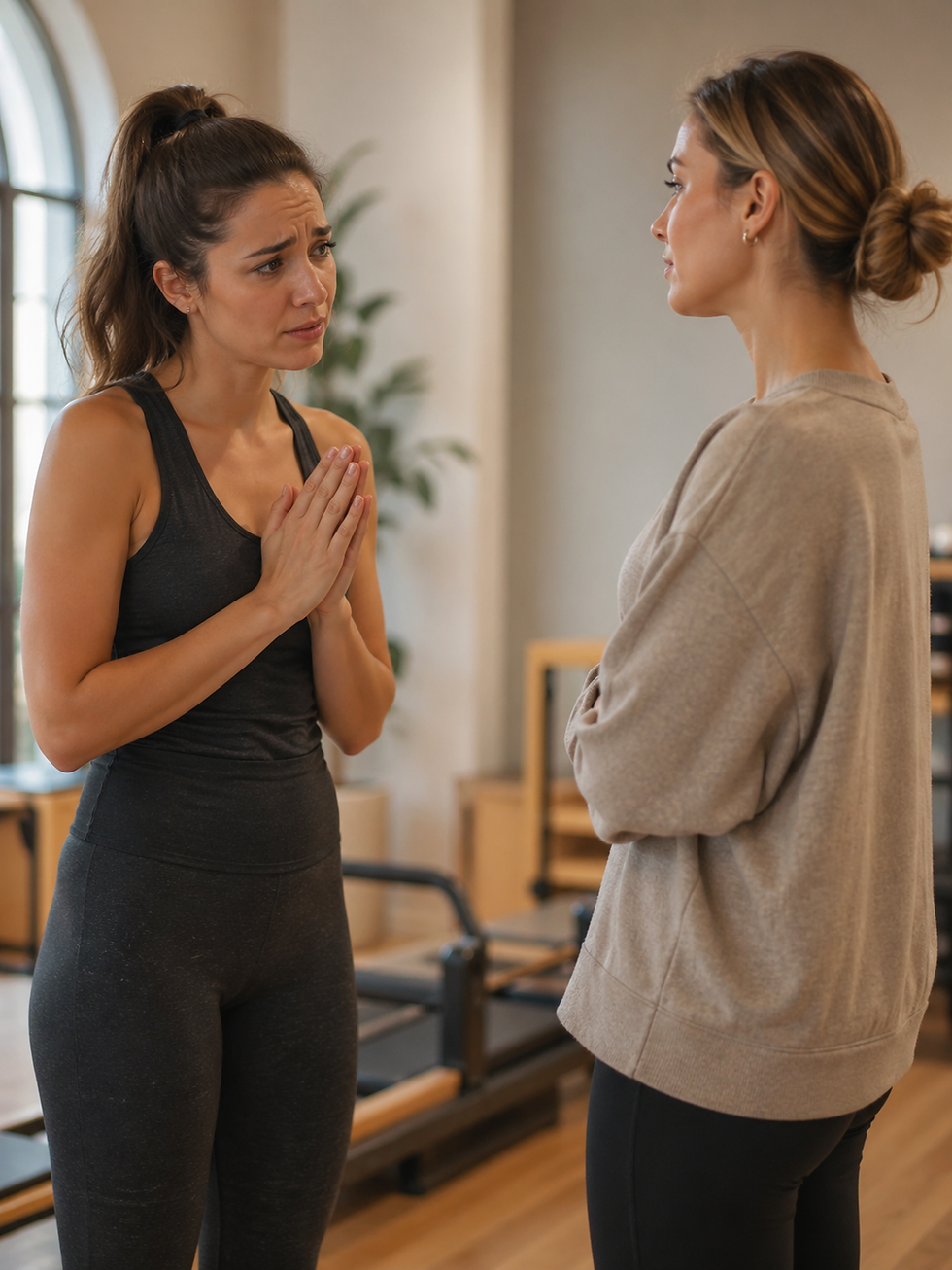
There’s something oddly comforting about how much we apologise. It’s almost part of the culture. Someone walks straight into us and we’re the ones saying sorry. A meal arrives cold and we apologise before even mentioning it. It’s polite, it’s ingrained, and if we’re honest, it’s a little bit ridiculous as well.
So as we sit here on a Soulful Sunday, just before the week begins again, it’s worth pausing for a moment and noticing how often that word slips into our conversations. Not when it’s needed, but when it’s simply a habit. Because over time, those small, unnecessary apologies start to shape how we show up, especially in the spaces where we are meant to lead.
In your Pilates studio, you are not just another voice in the room. You are the one creating the environment. You are the one guiding movement, holding attention, and giving people a sense of direction in their bodies. That role doesn’t need apology. It needs presence. It needs clarity. It needs a quiet confidence that allows people to trust what you’re saying without second guessing it.
It’s subtle, but it makes a difference. The moment you soften everything with “sorry,” you take a little bit of strength out of your message. Not because you’ve done anything wrong, but because you’ve suggested, even unintentionally, that you might have. And in teaching, that hesitation can be felt. Clients pick up on it. It changes the tone of the room.
What’s interesting is that removing unnecessary apologies doesn’t make you less kind. If anything, it makes you more supportive. Your words become clearer. Your guidance becomes easier to follow. Instead of asking permission to teach, you simply teach. You offer direction in a way that feels grounded and steady, which is exactly what most people are looking for when they walk into a class.
Of course, there’s still a place for a genuine apology. When something goes wrong, when you make a mistake, when you need to acknowledge something honestly, that’s where it matters. That’s where it builds trust. But when every sentence begins with “sorry,” it loses its meaning. It becomes background noise, and it quietly undermines your authority without you even realising it.
So maybe this week is less about trying to change everything and more about becoming aware. Notice the moments where “sorry” appears out of habit. Notice how often it comes out when nothing has actually gone wrong. Then gently replace it with something a little more direct, a little more certain, a little more aligned with the role you’re in.
You’ll probably still apologise when someone bumps into you. Most of us will. That’s not going anywhere anytime soon. But in your studio, in your teaching, in the space where people are relying on you to lead, you don’t need to apologise for doing exactly that.
And strangely enough, when you stop apologising for no reason at all, you don’t become less polite. You just become clearer, stronger, and far more present in the room. Which, when you think about it, is a pretty good place to start the week.


Comments