
Pilates Technique Thursday: You Are the Method, Not the Movements

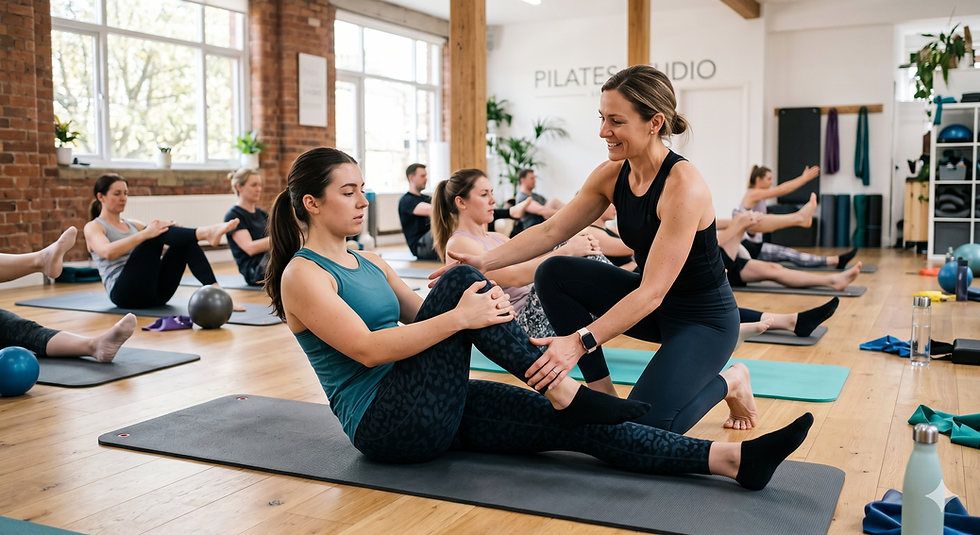
There’s a persistent idea in the industry that if you learn enough exercises, attend enough courses, and collect enough repertoire, you somehow become a better teacher. It sounds tidy. It feels productive. It’s also not true.
Pilates does not work because of the movements. It works because of how those movements are taught.
Two teachers can deliver the exact same exercise, on the same piece of equipment, with the same client in front of them, and get completely different results. One client walks away feeling connected, supported, and physically improved. The other feels confused, overworked in the wrong places, and no better than when they walked in. The movement didn’t change. The teaching did.
What you bring into the room is the method.
Your observation is what guides the session. Not just seeing that a client is moving, but understanding how they are moving. Where are they holding tension? Where are they avoiding effort? What are they not aware of? This is where teaching begins. Without observation, you’re just delivering choreography.
Your cueing is what shapes the movement. Direction without purpose creates noise. Purpose without clarity creates confusion. The balance is in knowing what to say, when to say it, and when to say nothing at all. Good cueing is not about saying more. It’s about saying what matters.
Your understanding of the method is what gives the movement meaning. If the exercise is just something to get through, the client will treat it the same way. If you understand why the movement exists, what it’s trying to achieve, and how it connects to the body in front of you, then the exercise becomes something entirely different. It becomes a tool, not a task.
And then there’s you.
Your personality, your presence, your ability to communicate, to listen, to adapt in real time. Clients don’t come back because you taught them the Hundred. They come back because they felt seen, understood, and guided. That doesn’t come from a manual. That comes from the teacher.
This is where many teachers get stuck. They focus on collecting movements rather than developing the skill of teaching. They chase variety instead of depth. They think the next course will fix the problem, when in reality the work is in refining how they deliver what they already know.
Learning movements is the beginning. It is not the outcome.
To make Pilates work, you have to work on teaching. That means practicing observation. It means refining your language. It means understanding the principles beyond the words and applying them in real time. It means recognising that every client is different, and the same movement will never land the same way twice.
The method lives in the teacher, not in the exercise list.
And once you accept that, everything changes.


Comments