
Pilates Fitness Friday: Building Rotational Strength Without Losing Mobility

When we think about movement, many people focus on moving forwards and backwards. We walk forwards, sit down, stand up, bend over and reach. Yet much of life happens in rotation. Turning to reverse the car, reaching for something behind us, carrying shopping bags, playing sports, or simply looking over our shoulder all require the ability to rotate efficiently.
As Pilates teachers, we often spend a lot of time working on rotational mobility. We encourage movement through the thoracic spine, create space between the ribs, and help clients develop greater freedom of movement through the upper body. This is important for many reasons, not least because good rotational mobility can improve breathing.
The rib cage is designed to move. Between each rib are the intercostal muscles, which assist with breathing and help the rib cage expand and contract. When the thoracic spine becomes stiff and the ribs lose their ability to move freely, breathing can become more restricted. This is one reason why exercises involving rotation often leave clients feeling taller, lighter, and able to breathe more comfortably.
However, mobility is only part of the picture.
Once we have achieved good rotational mobility, we need to develop the strength to control that movement. Having the ability to rotate is valuable, but having the strength to manage and stabilise rotation is what allows us to use that mobility safely and effectively in everyday life.
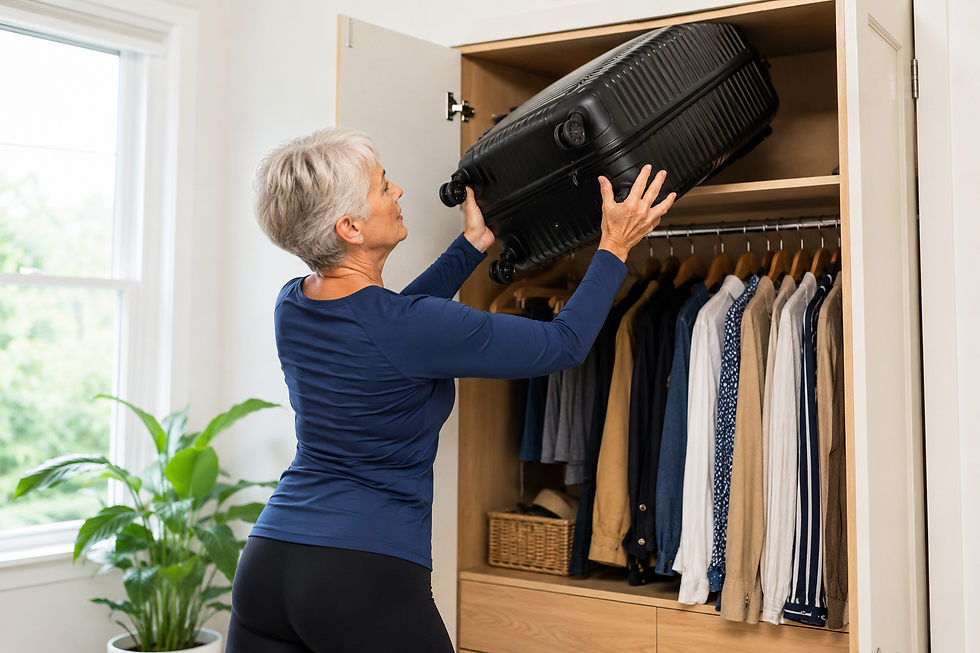
Think of a golf swing, picking up a suitcase from the car boot, reaching for an object on a high shelf, or simply turning quickly when someone calls your name. These activities require both mobility and strength. Without strength, the body may compensate through other joints and tissues, potentially increasing strain elsewhere.
One of the biggest mistakes teachers make is assuming that because a client can rotate, they need more rotation. Sometimes the body is telling us that it has enough mobility and now requires control.
A useful question to ask is whether the client can create the movement, control the movement, and stop the movement. Many clients can create movement. Fewer can control it. Even fewer can stop it.
There are several clues that tell us it may be time to focus more on rotational strength than rotational mobility. A client may demonstrate excellent rotation when lying down or sitting, yet struggle to maintain balance when rotating in standing. They may have plenty of range of movement but complain of feeling unstable during daily activities. You may notice that their rotation appears loose rather than controlled, with excessive movement coming from the lumbar spine instead of the thoracic region. Others can rotate well during slow exercises but lose control when carrying, lifting, reaching, or changing direction.
Breathing provides another valuable assessment tool. If a client can rotate comfortably but begins holding their breath, gripping excessively, or losing rib movement when resistance is added, strength and control may be the missing ingredients.
A simple standing test can reveal a great deal. Ask your client to rotate slowly to one side and then return to centre. Observe whether they maintain balance, whether the pelvis remains relatively stable, whether they can continue breathing normally, and whether they return with control rather than simply falling back to centre. If these qualities are missing, additional mobility may not be the answer.
Daily life offers its own practical assessments. Can your client lift a suitcase onto a high shelf? Can they reach comfortably into the back seat of a car? Can they carry a shopping bag in one hand without leaning excessively? Can they turn quickly to respond to an unexpected sound or movement? These activities challenge rotational strength far more than rotational flexibility.
The challenge for Pilates teachers is finding the balance. We should never sacrifice the space that allows us to breathe. Excessive bracing, gripping, or over-stabilising can restrict the natural movement of the rib cage and reduce breathing efficiency. The goal is not rigidity. The goal is support while maintaining freedom.
Joseph Pilates often spoke about developing a supple spine. Suppleness implies both mobility and control. A tree branch that bends with the wind but does not break is a useful image. It has flexibility, but it also has strength.
In practical terms, this means progressing clients from simple rotational mobility exercises into movements that challenge their ability to maintain alignment and control whilst rotating. Exercises using resistance, unstable positions, standing work, and functional loading can help build this capacity. The focus should remain on maintaining length through the spine, ease of breathing, and smooth movement rather than creating unnecessary tension.
As we age, rotational strength becomes increasingly important. It helps us maintain balance, react to unexpected movements, and continue participating in the activities we enjoy. Combined with good mobility, it allows us to move with confidence and efficiency.
This Fitness Friday, consider whether your programme develops both sides of the equation. Are you helping clients gain movement, or are you also helping them develop the strength to use that movement effectively?
The most resilient bodies are not simply flexible or strong. They possess mobility, control, strength, and the freedom to breathe throughout every movement. A strong rotation should never come at the expense of a good breath. The real goal is achieving both.


Comments