
Pilates Thoughtful Tuesday: When “You Must” Starts to Blind You

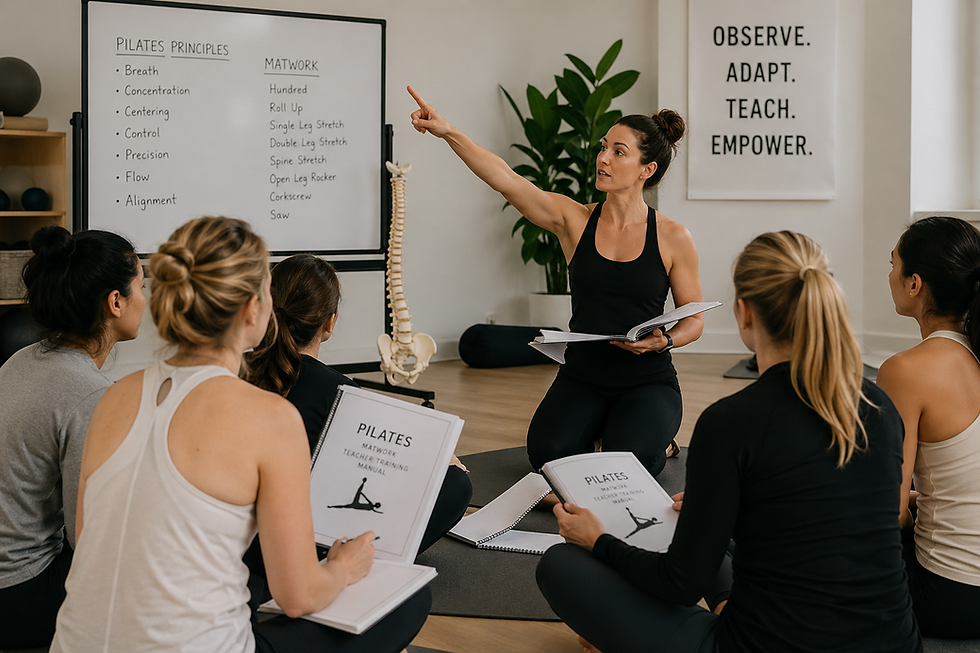
There’s a phrase heard far too often in teacher training rooms: “You must do it this way.”
Usually it arrives with great confidence, a pointed finger, and the sort of certainty normally reserved for people explaining parking rules. New teachers hear it and naturally assume they are receiving sacred truth. After all, the person at the front has a manual, a qualification, and an expression suggesting disagreement will bring storms.
Sometimes structure is necessary. If you are preparing for an exam, assessment criteria matter. You may need to demonstrate specific skills, sequence clearly, use recognised principles, or teach within the framework required by the awarding body. That is fair enough. Standards exist for a reason. Chaos in a practical assessment rarely scores well, despite what optimism suggests.
But outside assessment settings, Pilates is not built on one rigid lane.
There are many ways to teach the Hundred. There are different ways to approach breathing. There are various ways to prepare the spine, organise the pelvis, support a beginner, progress an athlete, or calm an anxious client. The destination may be similar, but the route can change depending on the body in front of you.
That is where problems begin. When teachers are told there is only one way, they often stop thinking. They stop observing. They start copying instead of teaching.
A new teacher then becomes frightened of choice. They worry if the arms are two inches lower than someone else’s version. They panic if one school cues the breath differently from another. They think variation means failure, when often it simply means context.
The real skill in Pilates is not memorising one script. It is understanding principles well enough to apply them intelligently.
Joseph Pilates did not leave behind a method so future generations could argue endlessly over tiny details like medieval scholars debating spoon angles. He created a system of movement. Systems breathe, adapt, and respond.
This links to another unhelpful habit in the industry: judging teachers by where they trained.
We can be quick to decide who is “good” based on a logo on a certificate. Yet many teachers enter training with honest intentions and little understanding of what comprehensive education should include. They trust the course in front of them. They do not always know what questions to ask yet.
So rather than judging, we should guide.
If a teacher has gaps, help them fill them. If they need mentoring, mentor them. If their course gave them limited teaching practice, support their development. Mocking people for not knowing enough while refusing to teach them is a very strange business model.
Let’s be clear though. This is not permission for incompetence. Safety matters. Scope of practice matters. Professional standards matter. There is a difference between being new and being careless.
But there is also a difference between standards and dogma.
Good teachers know when something must be done for safety or assessment. Great teachers know when there are several useful options. They can explain why they choose one, and they stay open to another.
So if someone tells you, “You must always do it this way,” pause for a moment.
Ask yourself: is this a principle, an exam requirement, a safety issue, or just their preference dressed up as law?
That question alone can save years of unnecessary blindness.
Because the most dangerous form of blindness in Pilates is believing your perspective is the only one worth seeing.


Comments